Contact
‘Sup
Clients
Portfolio
About
Home
MVP Made Easy  •  MVP Made Easy  •  MVP Made Easy

USING AI TO BUILD A TOOL TO MATCH MVPS WITH TECH

An acquaintance pitched me a rideshare app, nervously admitting she’d hire a team to build it from scratch. I thought why reinvent the wheel? I couldn’t in good conscience pitch my services. Instead, that moment doubled my resolve to build a platform connecting people like her to the solutions they need.
3 people icon
Client: MVP Made Easy
3 rectangular shapes
Project Type: Web App, Website
1 person with 4 curved lines surrounding
My Role: Context Design, UX, UI, Dev.
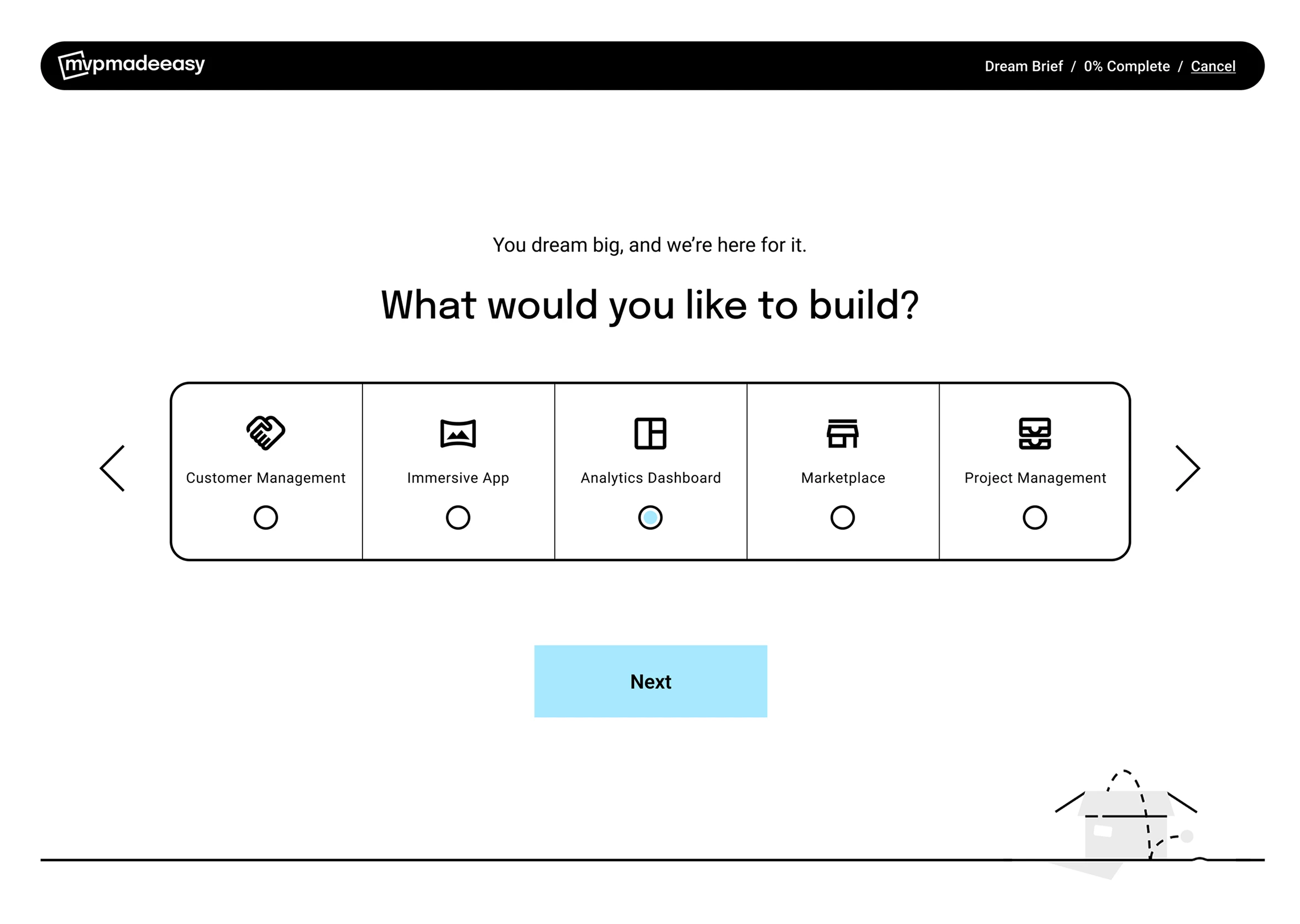
A clean onboarding UI for selecting product categories like "Analytics Dashboard" or "Marketplace," using icon-based cards to simplify complex technical choices.

CHALLENGE AND RESULTS

A slow realization. A sudden launch.
This idea didn’t just flash into existence; it’s the culmination of nearly 20 years of product design wisdom, starting back when building was slower and lonelier. Today, I can use AI to help build a tool like MVP Made Easy, which in turn connects everyday entrepreneurs—people far removed from the typical tech-hub founder archetype—to existing infrastructure to help validate their ideas efficiently. Let’s start with what I learned launching it.
A high-contrast four-point star sparkle icon, universally recognized as an AI symbol, used to establish the visual language and innovative theme of the case study.
AI-generated image of a brown puppy sitting at a desk with a green ball, facing a vintage blue translucent iMac computer while a person in a yellow sweater types in the background.
QA will always be mandatory
AI coding tools speed things up, but LLMs can be confidently wrong. I still had to verify outputs and thoroughly test what was generated.
Designing with Figma MCP in mind
Learning about Figma Model Context Protocol showed me how semantic architecture can better support my more complex, enterprise product work.
Distribution drives impact
Shipping a product is only the start. This project reinforced that after idea validation comes AEO, SEO, and marketing to reach real users.

A NORTH STAR FOR THE NON-TECHNICAL

It starts with the intake form
Building a product requires asking the right questions, which is where my experience meets this UX. Because users base credibility on visual design, I used a high-fidelity interface to bridge the gap between strategic inquiry and professional trust.

Using a well-designed form, MVP Made Easy captures a founder’s big idea by guiding them through a series of questions that uncover unknown unknowns. I used a mix of AI and know-how to stand this up, making a complex discovery process feel effortless. The result is a polished, credible experience that turns a big idea into a clear project vision I call a Dream Brief.
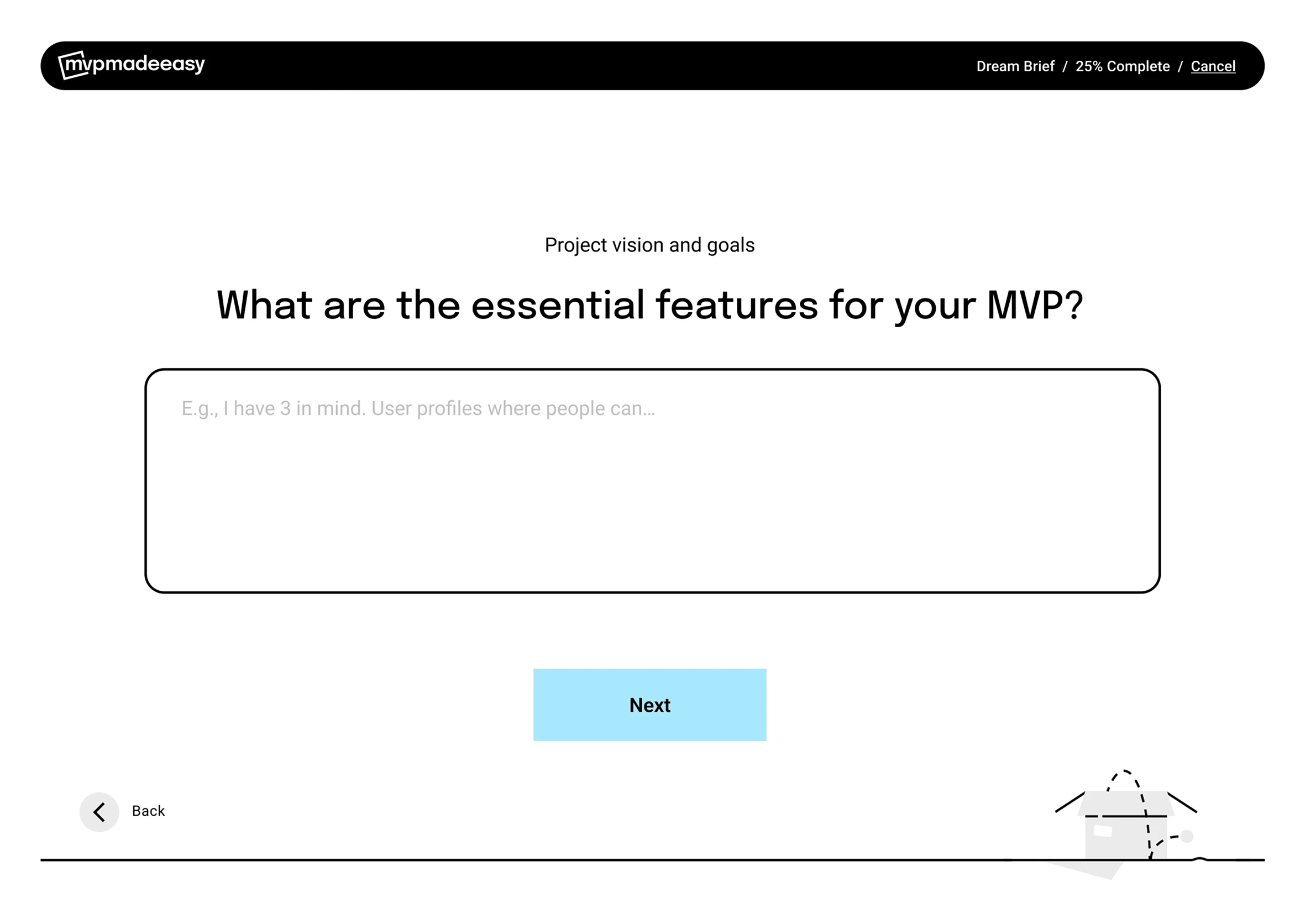
Onboarding UI for a project scoping phase, featuring a large text area for users to define essential MVP features, emphasizing a distraction-free UX.
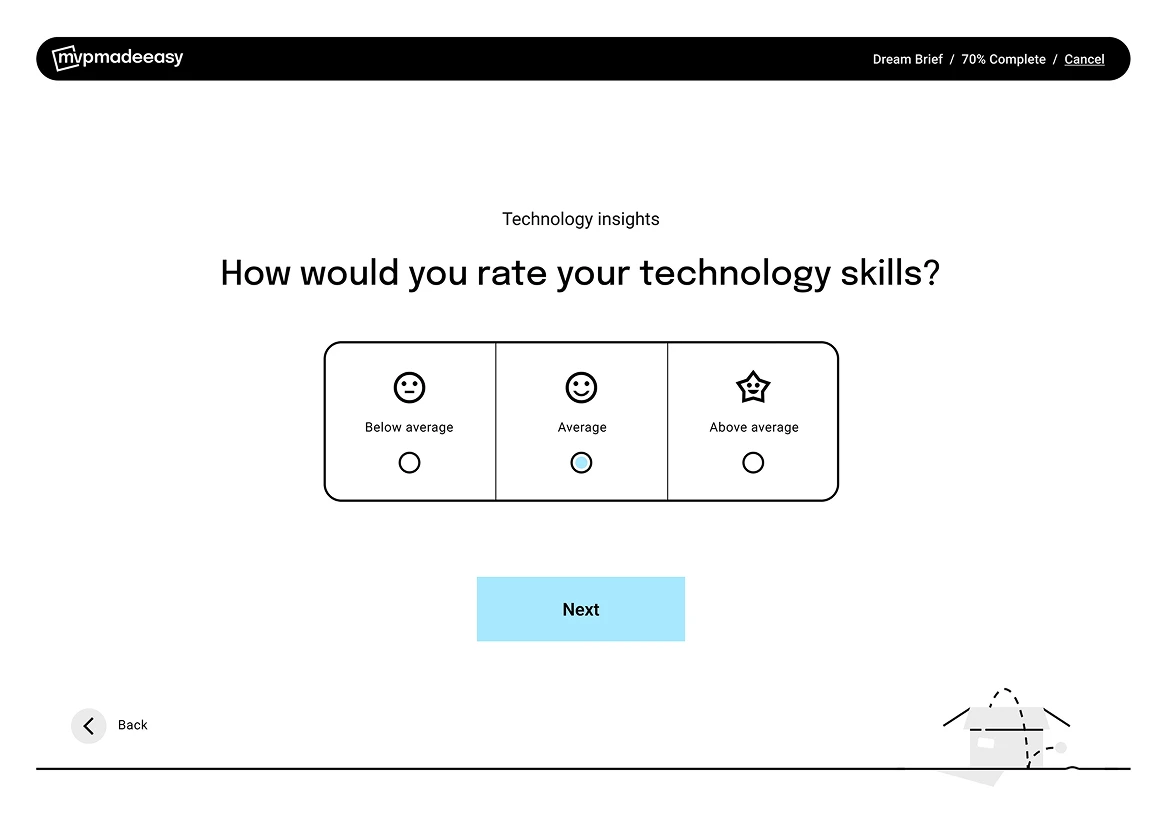
Onboarding UI using emojis to help founders self-rate technical skills, demonstrating a low-friction approach to data collection.
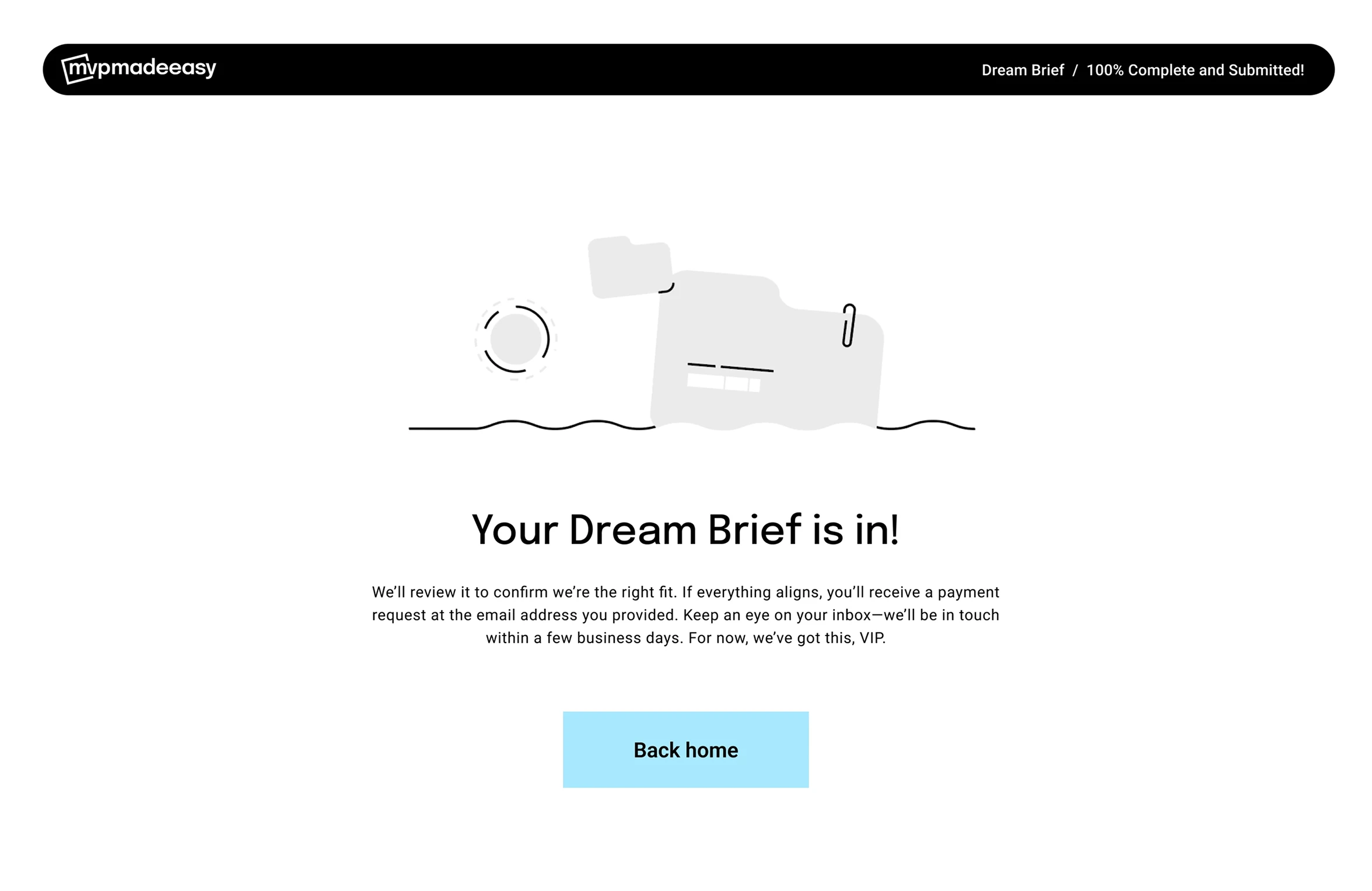
Confirmation screen with custom line-art illustrations and clear copy, providing a positive emotional payoff after completing a technical project brief.
Dream captured: The final success screen after a founder completes the 15–20 questions in the brief.

FILLING IN THE GAPS WITH EXPERT CONTEXT

Computer screen showing folder icons with one folder named 'Booking Systems' highlighted and cursor pointing at it.
Bright green ball casting a soft shadow on a white background.

From Dream Brief to Easy Stack

Context is the new operating system
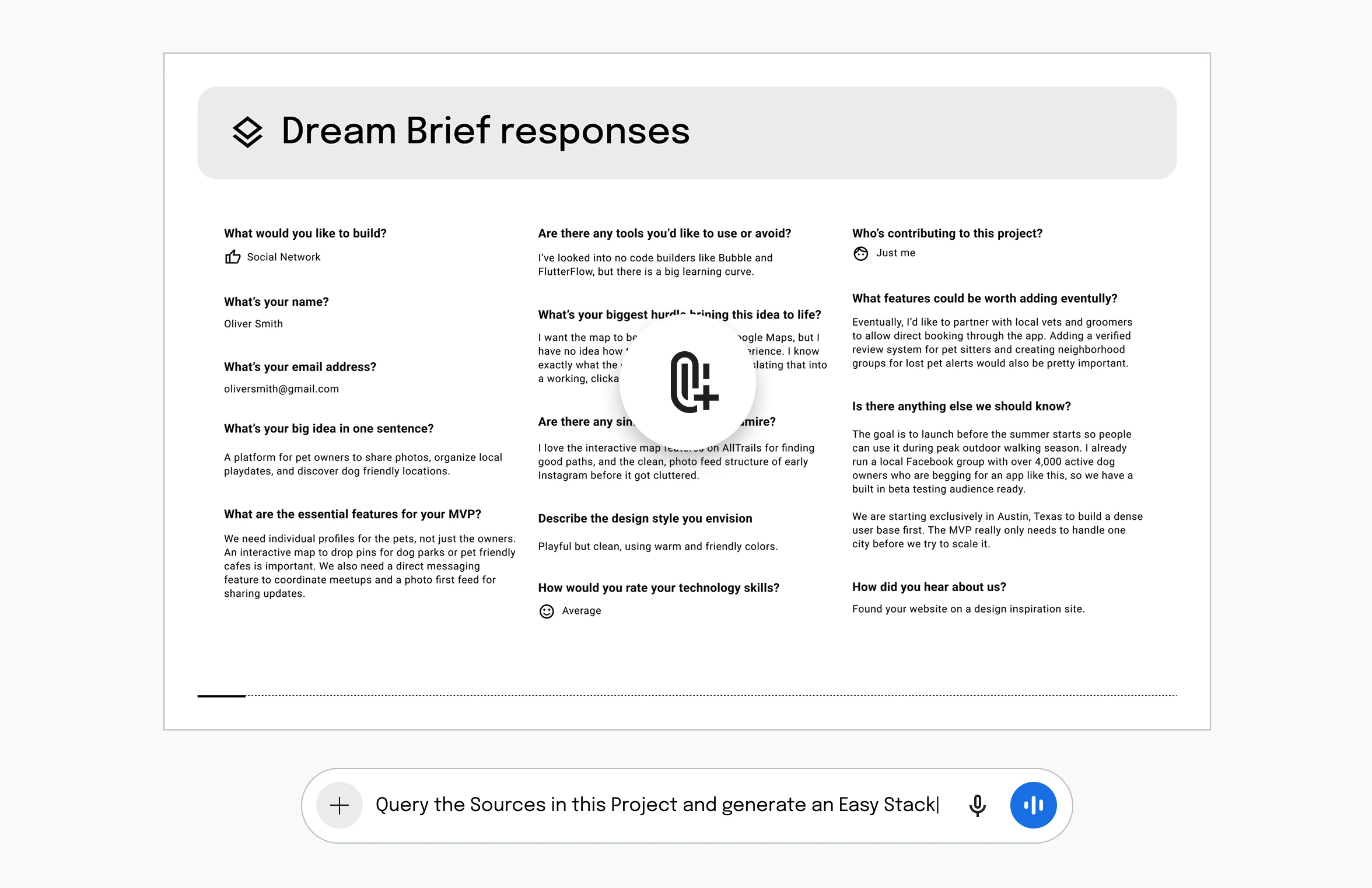
In an AI-driven market, the most powerful asset you can create is context. I define this discipline as Context Design... curating and structuring information to guide generative systems toward a specific outcome. MVP Made Easy runs on this premise. I compile PDFs, and past research into a cogent GPT system. When I upload a user’s Dream Brief and apply a prompt, the LLM queries my expert context.
A UI layout featuring a summary and an AI query bar, demonstrating context design and the structuring of user data for LLM processing.

A hybrid workflow with an automated future

This offering doesn’t design or build new experiences from scratch. Instead, it guides users toward the wealth of tools that already exist like white-label platforms, templates, and no-code tools. For non-technical founders, it’s the perfect low-barrier first step. For me, it keeps my desk open for the truly bespoke work my clients need.
From there, I refine and compile the information into a professional PDF called an Easy Stack. The goal is to deliver three options ranked by ease, complete with projected third-party costs, implementation steps, discounts, and more—not every founder idea is a moon shot,  and the Easy Stack proves it.
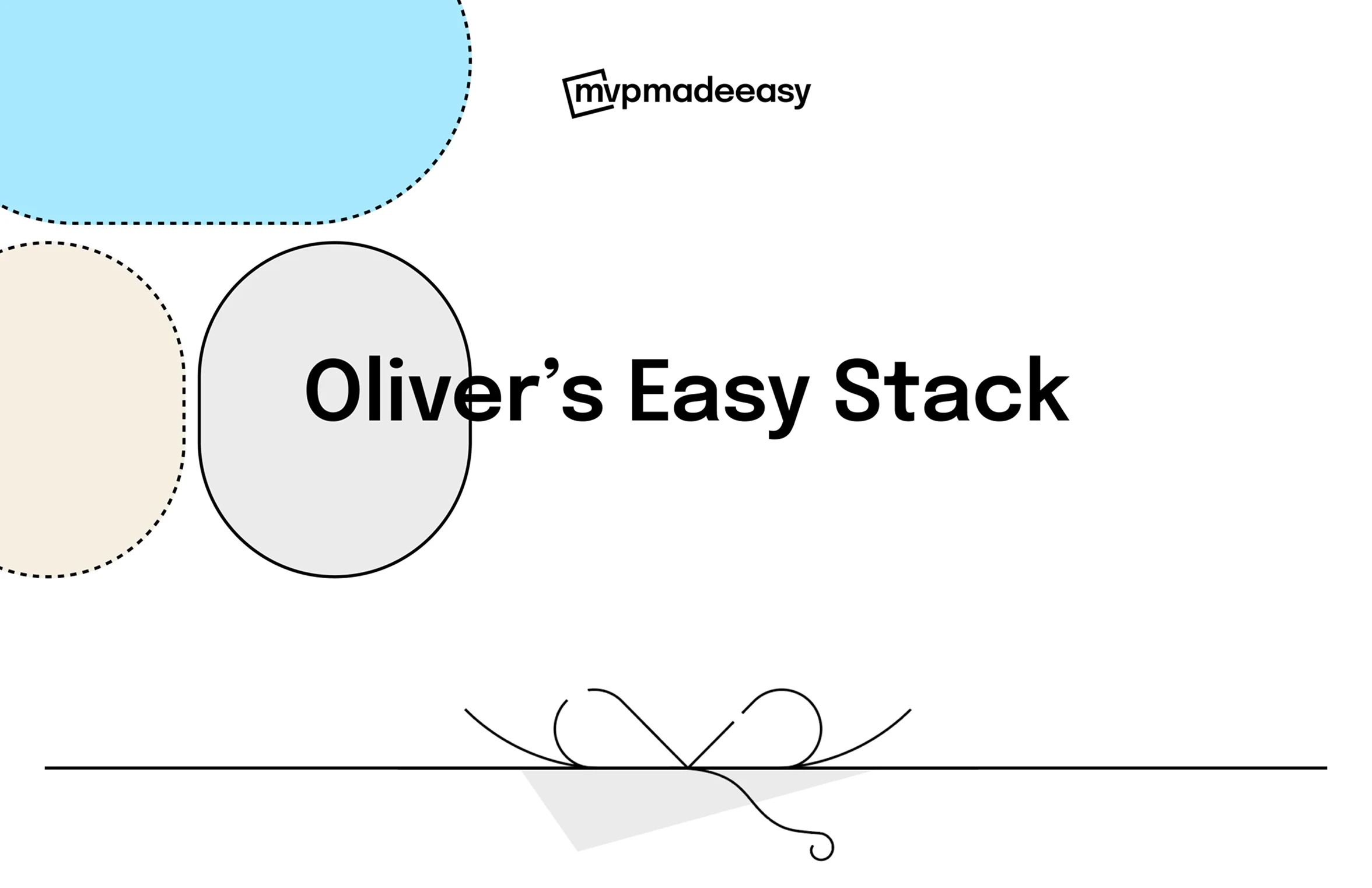
Report cover with pill shapes in pastel colors around the text "Oliver's Easy Stack".
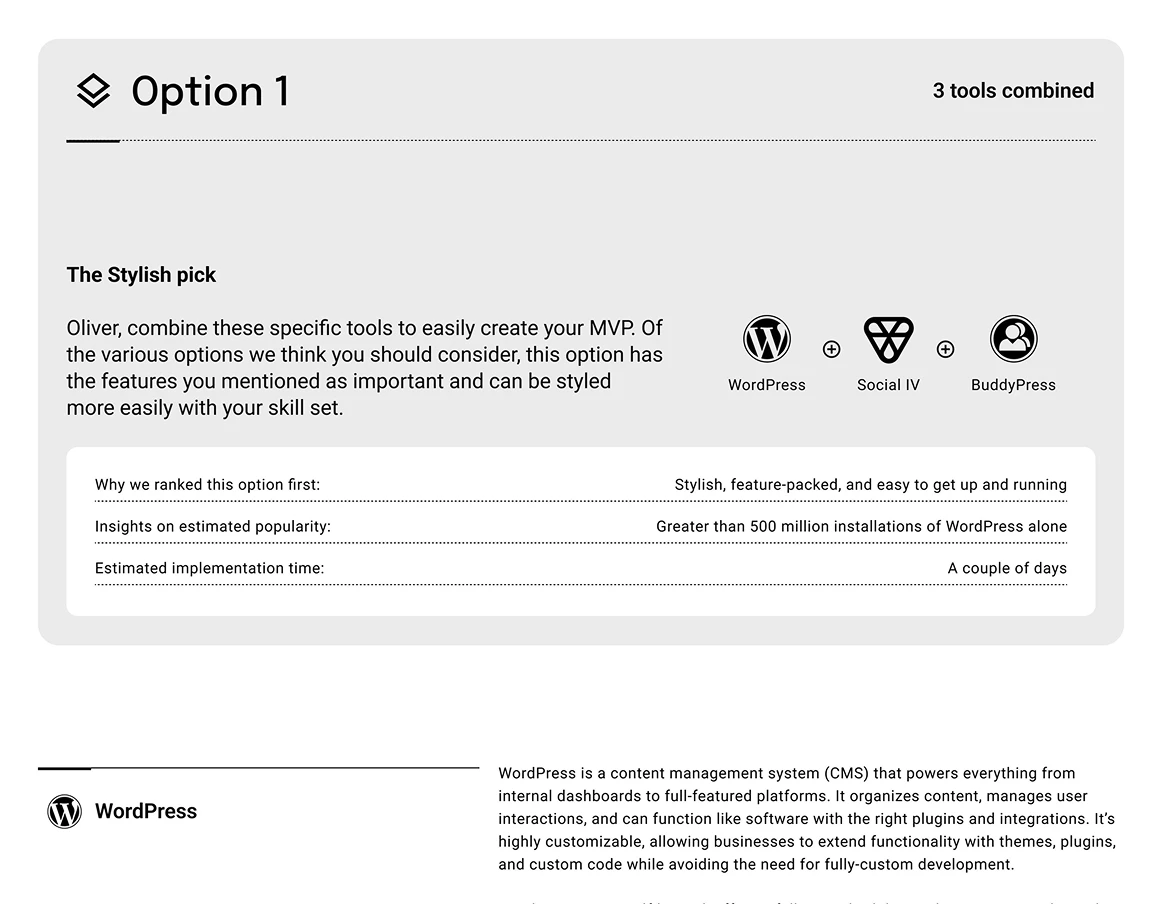
A UI component showcasing logical information grouping and icon-based signaling to help users navigate complex technical tool recommendations.
A donut chart showing a $518 price forecast, demonstrating data visualization and ample use of white space.
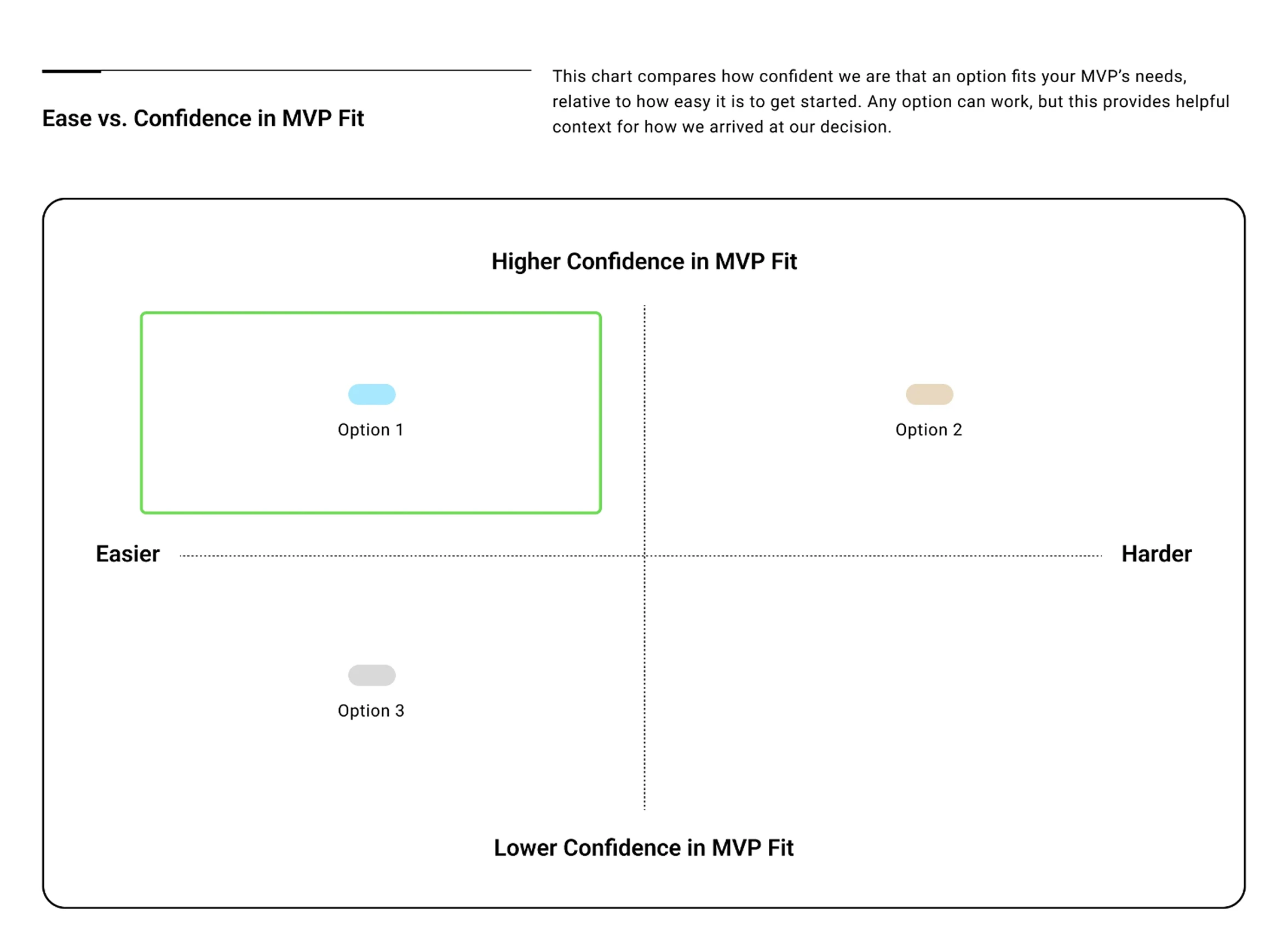
Scatter plot chart comparing three options by ease of implementation and confidence in MVP fit, with Option 1 easiest and highest confidence, Option 2 harder but moderate confidence, and Option 3 easier but low confidence.
Subjective clarity: One example of the visual data I use to guide a founder toward the right MVP.

BUILDING A DESIGN SYSTEM THAT BUILDS TRUST

White text logo mvpmadeeasy with 'mvp' inside a tilted square on a black background.
Bright green ball casting a soft shadow on a white background.

The other half of the work

Launching an idea takes more than a solid approach. You have to look the part, and strong design helps get there fast. While most of this case study focuses on product strategy, nearly twenty years of experience means I’m just as fluent in high-fidelity execution. I used that range to craft a sharp logo, custom line illustrations, and a clean, cohesive color palette. The result signals a premium experience before a founder even submits their first idea.
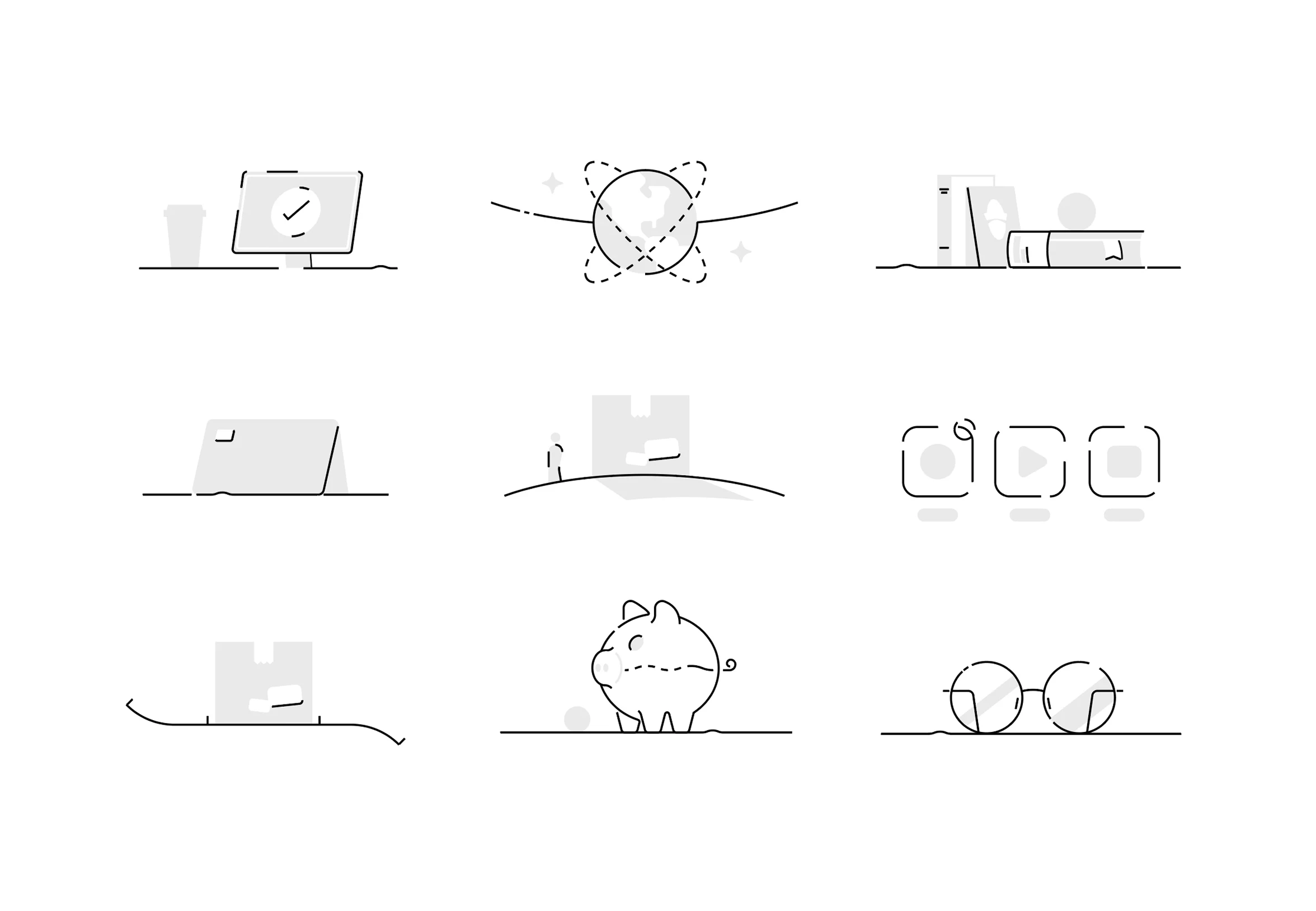
A grid of nine black and white vector illustrations, demonstrating high-fidelity execution and a cohesive visual language.
Adaptive strokes: A sample of the assets I illustrated. They use variable weights to scale from bold to hairline as needed.

A nod toward the Model Context Protocol

As for the design system, I’ve learned the importance of semantic naming conventions. What caught my attention recently is how emerging frameworks like the Figma Model Context Protocol rely on this exact architecture to automate design systems. That standard is influencing how I think about larger enterprise work.
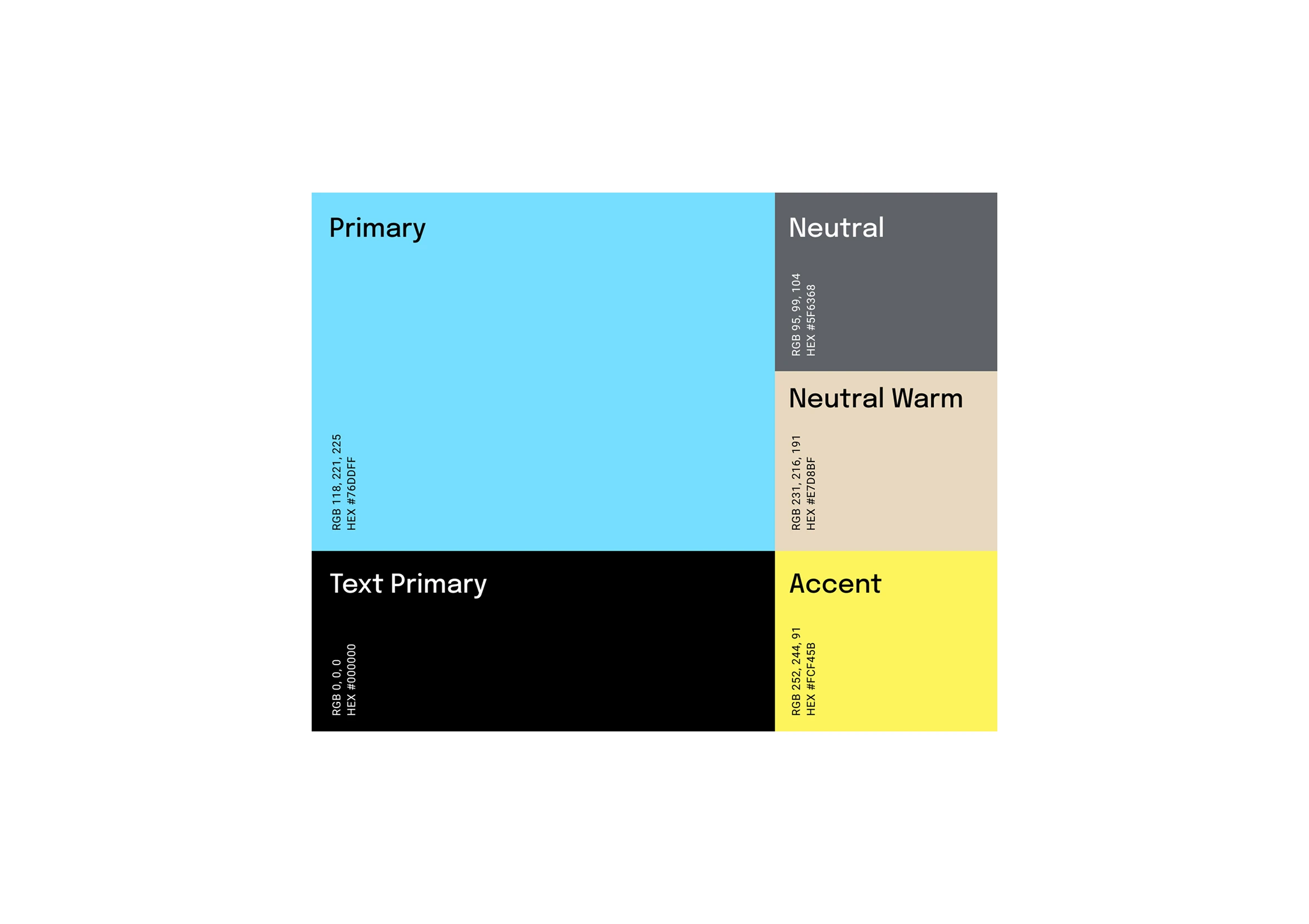
A color palette featuring blocks for primary, neutral, and accent colors, demonstrating semantic naming conventions and scalable design system architecture.

THE REAL VALUE OF GENERATIVE AND AGENTIC AI

AI-generated image of a person in a yellow sweater reaching for a green ball on a desk while a mature brown dog watches beside a modern Apple desktop computer closing the narrative loop for the case study.

Testing the limits of modern workflows

Time moves forward, tools improve, and limits fade. With AI, I can see side projects like this one past the initial concept, into execution. Doing that well means treating context as UX. It means sending complex work to heavy models and simple tasks to leaner ones. Uncovering technical insights like that is exactly how these projects compound into skills that run far deeper than aesthetics.
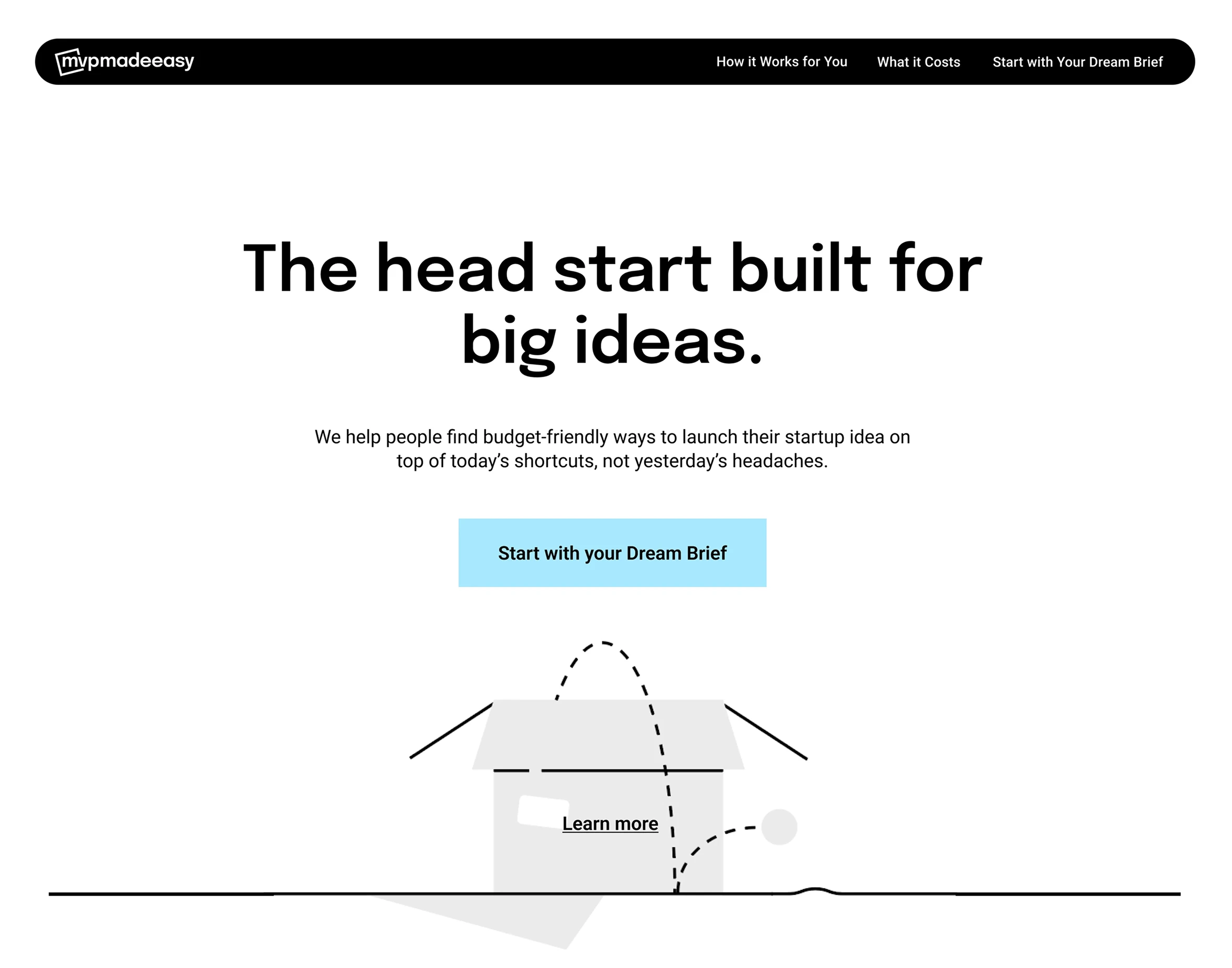
Website hero section with the text 'The head start built for big ideas' and a button labeled 'Start with your Dream Brief', above a graphic of a ball bouncing out of an open box.

VIEW THE MVP MADE EASY SITE

Case Study

Up Next

B2C